
Technical Asset Management Software for Renewable Energy Portfolios
One solar asset is easy to keep track of. The datasheet is in a folder, the warranty certificate is in an inbox, and everyone roughly knows what’s covered. That stops working once a portfolio spans dozens of SPVs and thousands of components, each site commissioned and handed over a little differently.
The technical asset management module in ACTIS ERP holds the equipment records, specifications, documents and warranties for every asset in your portfolio, in one structure the rest of the ACTIS ERP platform for renewable portfolios reads from. When service checks whether an inverter is still under warranty, or reporting pulls a plant’s technical data, both use the record your team already maintains.

Why asset records get harder to find as a portfolio grows
The first site is rarely the problem. The fortieth is: spread across regions, with growing regulatory and audit commitments and more vendors involved. The asset manager, the EPC, the O&M provider and several subcontractors each end up holding part of the record.
What's Tracked |
Where it usually lands |
|---|---|
Equipment specifications and datasheets |
A shared drive, organized differently for each site |
Warranty coverage and expiry dates |
A PDF in an old email, found once a claim is already urgent |
A warranty extension and the emails that agreed it |
One person's inbox |
O&M, EPC, lease and insurance contracts |
Wherever whoever set up the site put them |
The portfolio structure itself |
Rebuilt slightly differently by monitoring, finance and reporting |
When an auditor asks for any of it, someone has to go and assemble it.
One asset registry for the whole portfolio
ACTIS ERP works as renewable asset registry software: one solar asset registry for the whole portfolio, rather than a separate filing system for each site. Every asset record brings together:
- Where it sits in the portfolio hierarchy
- What it is: equipment records and technical specifications
- Its paperwork: datasheets, certificates, drawings and contracts
- Its warranties, including extensions and expiry dates
- Its history: who changed what, and when
- Who can see it, set by role and scope
How complete the record is on day one depends on the documentation available at handover. The aim is one record every other module can trust.
The hierarchy every module is built on
The standard ACTIS ERP structure is:
Portfolio → SPV → Plant/Asset → Equipment, mirroring how renewable portfolios are owned through SPVs and project companies. It can be configured to match how your own portfolio is organized. Move from a portfolio view to a single SPV, plant or component without switching systems.
The same structure organizes alerts in real-time solar monitoring and lets stakeholders drill from portfolio results to a single plant in portfolio reporting. It is defined once, here.
For a solar portfolio, this is PV technical asset management in practice: inverters, strings and panels sit in the same structure as every other asset, so your PV asset management software and the rest of the platform read one set of records instead of a spreadsheet kept just for the PV fleet.
Equipment records and documents
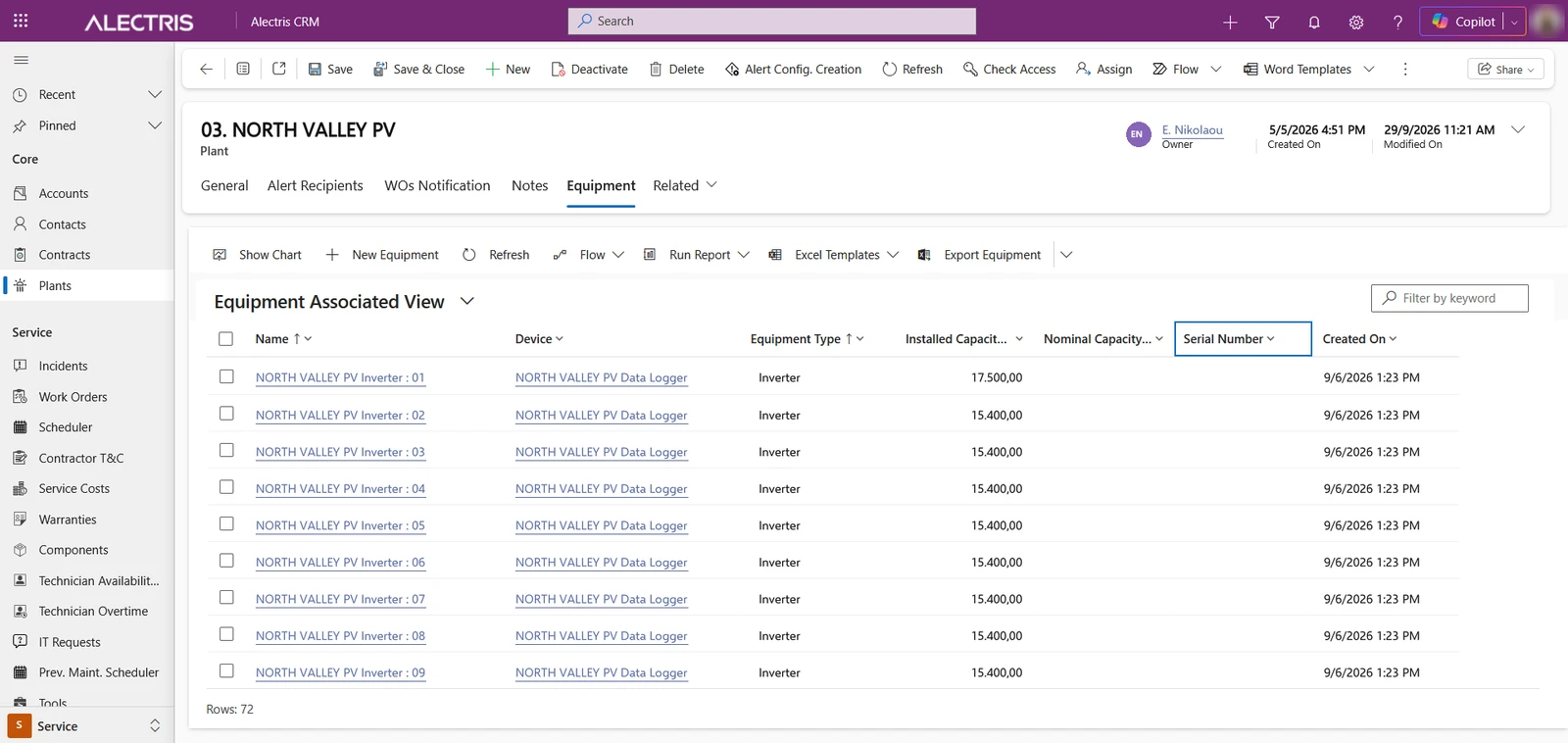
Each piece of equipment has its own record, and the asset registry goes down to individual panel level. Datasheets, commissioning certificates, engineering drawings and contract files attach directly to the asset, work order or contract they belong to. An audit request means opening a record, not assembling a folder.
Illustrative data
Illustrative data
Equipment records and documents
Each piece of equipment has its own record, and the asset registry goes down to individual panel level. Datasheets, commissioning certificates, engineering drawings and contract files attach directly to the asset, work order or contract they belong to. An audit request means opening a record, not assembling a folder.
Illustrative data
Warranties tracked as records
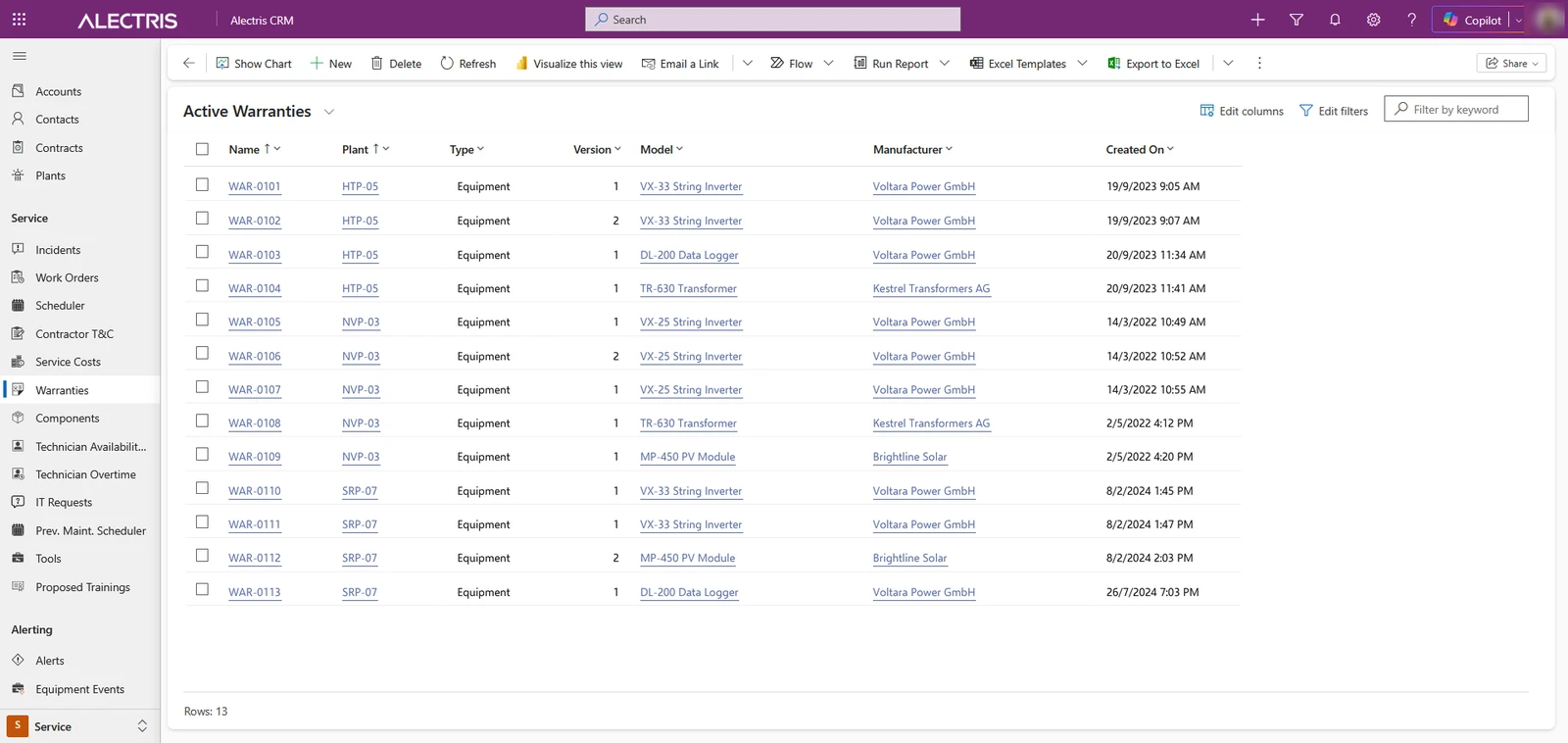
Warranty coverage, conditions, extensions and expiry dates are tracked for every component and plant. Each warranty is linked to the equipment it covers and to the incidents and contracts it relates to, and the emails around it can be kept with the record, so what was agreed is still there after the person who agreed it has moved on.
That link is what lets service management check warranty status before a technician is dispatched.
Audit history and access control
Every change to an asset record is logged: what changed, when and by whom. That is the evidence trail audits, regulatory checks and “which version was current?” disputes depend on.
Access is set by role and by scope: portfolio, SPV or site. A subcontractor sees only the plants they service; an auditor sees only the documents relevant to the review. ACTIS ERP is built on Microsoft Dynamics 365 with field-level permissions across nine clearance levels, hosted in an ISO 27001 data center. Read more about security and access control in ACTIS ERP.
Because ACTIS ERP runs in the cloud and works in any web browser, the record is available wherever the people with access are working.
What this module does and does not do
What ACTIS ERP’s technical asset management software covers, and where everything else lives:
Within scope
Portfolio hierarchy; equipment records and specifications; documents and contract files; warranties and extensions; audit history; role-based access.
Outside scope
- Live data, alerts and alert-to-incidentReal-Time Monitoring
- Incidents, work orders, spare parts and the field appService Management
- Timesheets and labour costCost Management
- Budgets, loans and contract obligationsFinancial Asset Management
- Accounts, contacts and communication trackingSales and Marketing
- Dashboards and KPIsTechnical, Operational and Financial Reporting
Frequently asked questions
What is technical asset management software?
In ACTIS ERP, it is the module that holds a renewable portfolio's equipment records, specifications, documents and warranties in one hierarchy that monitoring, service and reporting all read from. Whether you call it solar technical asset management or renewable asset management, it is the same set of records.
How is it different from solar monitoring and service management?
Monitoring shows how equipment is performing right now and raises alerts. Service management handles incidents, work orders and field work. Technical asset management holds the record both of them rely on: what the equipment is, its documents and its warranty status.
Can I track warranty extensions and expiry dates by component?
Yes. Each warranty, including any extension, is a record linked to the component or plant it covers and to related incidents and contracts, so status is checked against the record rather than a certificate someone has to find.
Does it manage contract compliance?
Contracts can be linked to an asset, SPV or portfolio with their files attached here. Deadlines and financial obligations are tracked in Financial Asset Management, and in-scope versus out-of-scope work is classified in Service Management.
Where are accounts, contacts and timesheets handled?
Accounts and contacts link to assets, SPVs or the whole portfolio, with their communication tracked, in Sales and Marketing. Time logged against assets, SPVs, portfolios and clients, and the comparison between what is charged and what it costs, is in Cost Management.
Can auditors or subcontractors get limited access?
Yes. Access is set by role and by scope, so an external party sees only the portfolio, SPV, site or documents relevant to them.